
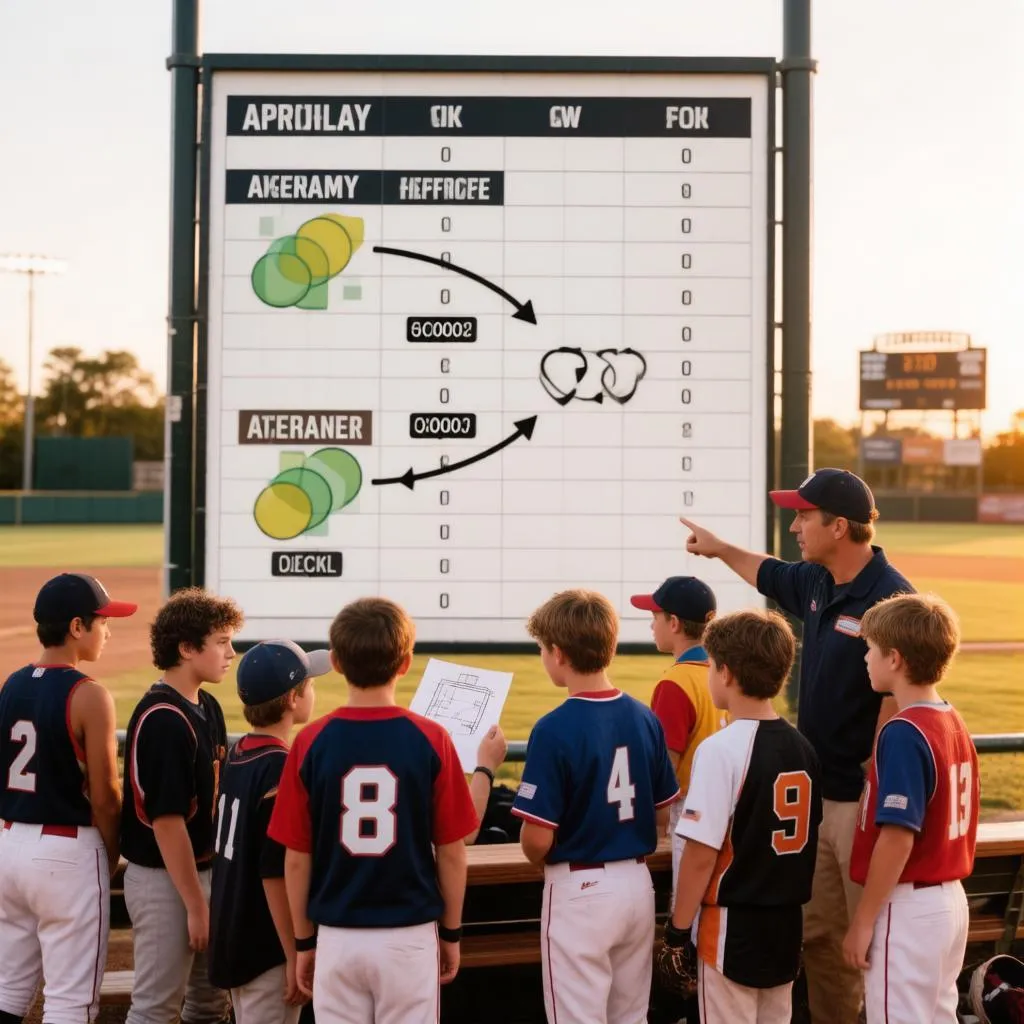
Walk into any weekend youth baseball tournament and you will hear the word “pool” tossed around constantly: pool standings, pool winners, seeding out of the pool. For families new to tournament baseball, the format can feel confusing precisely because it is designed to be flexible. Instead of a straight knockout bracket, teams are grouped, play a set of round-robin games, and only then enter the single-elimination round that decides the champion. Understanding how that grouping works — and what actually moves a team up the standings — changes how a coach manages every inning of the first two days.
What pool play actually is
Pool play is a round-robin stage. Tournament organizers divide the entered teams into groups called pools, usually of four to six teams, and every team in a pool plays the others once. A four-team pool means three games per team; a six-team pool means five. Nobody is eliminated during this stage. The purpose is to guarantee each team a fair number of games while generating enough results to rank the field before the knockout rounds begin. When pool play ends, organizers rank the teams within each pool using the tournament’s tie-breaker rules, and the top finishers — often the top two, sometimes the top three or four — earn spots in the championship bracket. The remaining teams typically drop into a consolation or silver bracket, where they keep playing meaningful games rather than going home.
How standings are calculated
The ranking formula looks simple from the outside: wins, then losses. In practice, most youth tournaments weight things a little differently. A common points system awards two points for a win, one for a tie, and none for a loss, though plenty of rulebooks simply count winning percentage. What trips up newcomers is everything that follows the record. Tournaments stack secondary criteria — run differential, runs allowed, head-to-head results — to separate teams with identical records, and those criteria reward different behaviors. A coach who understands the stack can make deliberate choices: whether to keep starters in during a blowout, when a single run matters more than usual, and when the standings math says the game in front of them is effectively decided.
A sample pool and how it plays out
Numbers make the format concrete, so consider a four-team pool where each team plays three games over two days. Standings might look like this by Sunday morning:
| Team | Wins | Losses | Ties | Runs scored | Runs allowed | Run diff |
|---|---|---|---|---|---|---|
| Rangers | 3 | 0 | 0 | 24 | 9 | +15 |
| Huskies | 2 | 1 | 0 | 18 | 12 | +6 |
| Falcons | 1 | 2 | 0 | 11 | 17 | −6 |
| Vikings | 0 | 2 | 1 | 9 | 24 | −15 |
On paper the picture is clean: the Rangers swept their pool and the Huskies locked up second place. But tournaments rarely stay that tidy. Suppose the Huskies and Falcons had both finished 1-1-1. Then head-to-head result, run differential, and runs allowed would each get their turn, and a single inning on Saturday could decide which team advances. This is why experienced coaches track not just their own score but the scores around the pool — a run allowed in a game they are not even playing can knock them out of a seeding spot.
Seeding: what the pool results decide
Once pools conclude, teams are placed into a bracket according to their finish. The most common arrangements are designed to keep the best teams apart for as long as possible, which protects the quality of the championship game. The usual logic looks like this:
- Pool winners receive the highest seeds and face the lowest finishing teams from other pools in round one
- Runners-up are cross-matched, so the second-place team from pool A meets the second-place team from pool B, not its own pool rival again
- Byes may be awarded when the bracket has more spots than qualifying teams, often given to the best overall records across all pools
- Cross-pool matching is standard, which means a team can meet an opponent again in the final even after beating them in pool play
The seeding stage is where tournaments differ most from one another. Some events reseed after every bracket round, placing the highest remaining seed against the lowest; others freeze the bracket from the start. Coaches should confirm which system applies, because it affects when their strongest pitching becomes available — the difference between saving an ace for the semifinal and burning him in the quarterfinal.
Strategy inside the pool stage
Pool play rewards teams that think in terms of the whole weekend rather than a single game. Pitching management sits at the center of it. Most tournaments enforce pitch counts with mandatory rest days, so a coach carrying three usable arms has to plan which games each one starts and who covers the innings between. Depth on the mound often matters more than having one dominant pitcher, because a team that burns its ace to win game one may have nothing left for the bracket.
Lineup management matters just as much. Pool games are the natural place to give bench players at-bats, test infield combinations, and rest tired legs, all while staying close enough to win. Falling behind early in pool play is not fatal; running out of pitchers by Sunday is. The best tournament coaches treat the round-robin stage as controlled experimentation and the bracket as the place where the best version of the team appears.
The math of advancing
Every pool is different, but certain patterns repeat. Knowing the likely advance scenarios helps a team set goals before the first pitch. In a typical four-team pool sending two teams forward, the pathways are straightforward:
- Win all three games and the team advances as the pool winner regardless of tie-breakers
- Win two of three, and advancement usually holds unless run differential against the other contenders collapses
- Win one of three, and advancement requires a narrow run-differential race with multiple tied teams, which is uncommon but possible
- Finish with ties in play, and the head-to-head and runs-allowed criteria take over, rewarding strong defense over raw scoring
The lesson from this progression is that the second game of a pool is often the real hinge point. A team that splits its first two games enters the finale needing a win with a healthy margin, while a team that wins its opener can afford to manage innings and protect arms. Coaches who walk players through these scenarios on Friday night play the weekend with clearer heads than the ones who discover the math in the final inning.
When pools are unbalanced
Not every tournament can distribute talent evenly across pools, and larger events sometimes seed pools in advance so that the strongest teams head separate groups. This creates an honest question about fairness: a second-place finisher in a deep pool might be better than the winner of a shallow one. Many tournaments address this by advancing a set number of wild-card teams — the best records across all pools that did not finish on top — into the final bracket spots. Wild-card criteria usually mirror the tie-breaker stack, so run differential quietly becomes the whole tournament’s currency. For teams on the bubble, the difference between advancing and going home often comes down to a handful of runs spread across two or three games.
What players and parents should watch for
The pool stage moves quickly, and the details that decide advancement are easy to miss from the bleachers. A few habits keep everyone informed and reduce the Sunday-morning scramble:
- Check the official standings board after each round rather than relying on word of mouth, since errors happen and protest windows are short
- Note the run differential cap in the rulebook, because extra runs beyond it stop counting toward the standings
- Track which opposing pitchers have thrown and how many pitches they used, since their availability shapes the bracket
- Confirm the bracket schedule the moment it posts, including field assignments and start times, which frequently shift with weather
Parents who understand the format also help their players emotionally. A loss in pool play is rarely a disaster, and a win does not guarantee anything. Framing each game as one chapter of a weekend story keeps young athletes from riding every score too hard.
From pool to playoff
Pool play exists to sort, and the bracket exists to decide. Teams that arrive knowing the format treat the round-robin stage as an opportunity: to measure themselves, to develop depth, and to position for seeding without spending everything on day one. By the time the championship bracket begins, the teams that advance are usually the ones that managed the math as well as the game — who protected their pitchers, scored the extra run when the differential cap allowed it, and knew exactly what Sunday required. That preparation is invisible in the box score but decisive in the standings, and it is available to any team willing to read the format before the first pitch is thrown.