
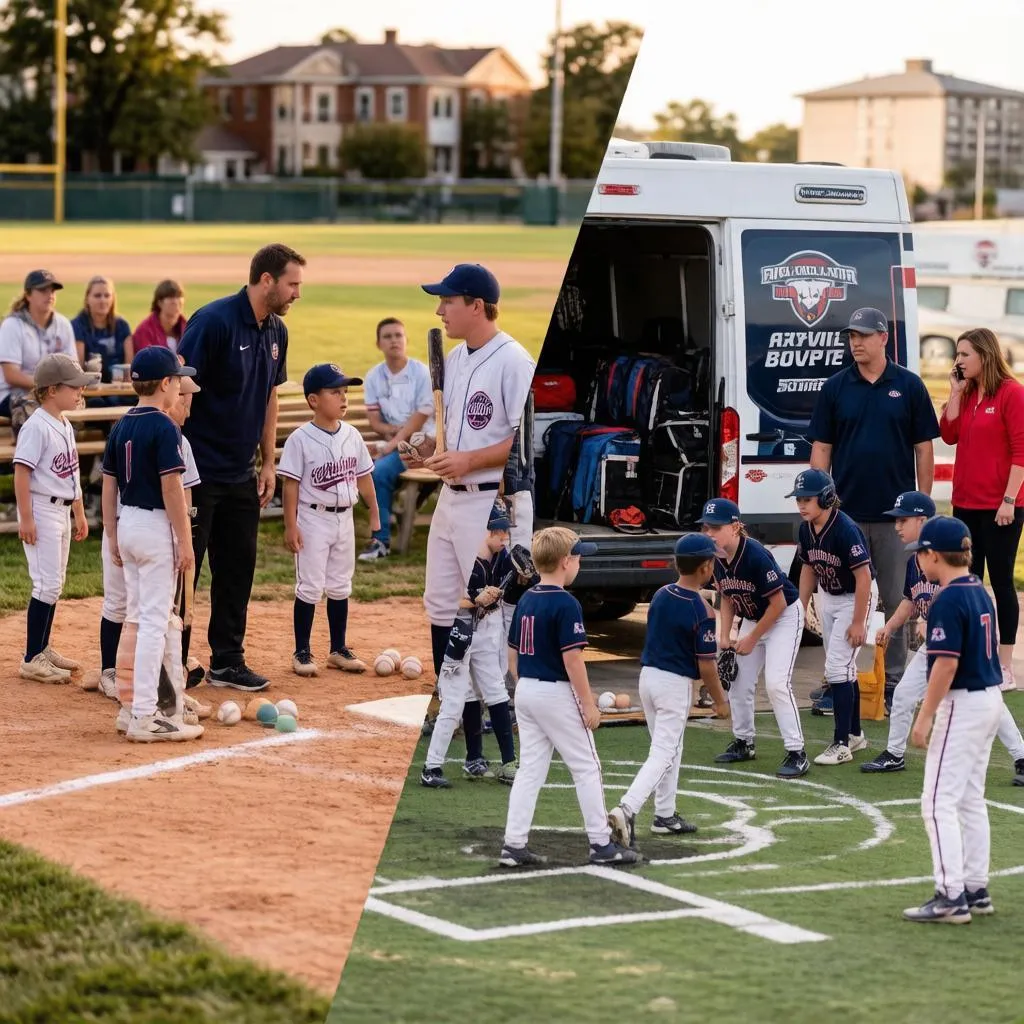
Every parent of a young baseball player eventually faces the same fork in the road. The local Little League season is winding down, someone mentions a travel team holding tryouts, and suddenly the family is weighing a decision that touches the calendar, the budget, and the child’s love of the game itself. The two paths are not opposites — plenty of players do both — but they ask very different things of a family. Getting honest about those differences before committing is the best way to keep baseball fun instead of turning it into a second job.
What Little League really offers
Little League, and community rec leagues like it, is built on one promise: every child who signs up gets to play. Teams are formed through drafts designed to spread talent evenly, playing-time minimums are written into the rules at most levels, and the season runs on a neighborhood rhythm — one or two weeknight practices, weekend games, and a schedule that ends before summer deepens. The competition is genuinely mixed, which means a first-year player shares a dugout with a three-year veteran, and the league’s best team advances toward district and state tournaments with the famous route to Williamsport at the top.
The strengths of this model are easy to undervalue until they are gone. Kids play with school friends. Coaches are usually parent volunteers. The cost covers a uniform, insurance, and field upkeep. And because the season is compact, a child can play Little League, another spring sport, and still make it to the family vacation.
What travel baseball actually is
Travel baseball is club baseball. Independent organizations hold open tryouts, select rosters, and then compete against other clubs across a region, usually in weekend tournaments. These programs vary enormously — from loosely organized parent-run squads to professional outfits with paid coaches, indoor facilities, and year-round training calendars. What unites them is the competitive bar: rosters are chosen, playing time is earned, and the opponents on Sunday morning are usually the best available players from several surrounding towns.
For a player who has outgrown recreational pitching and wants a faster pace of play, travel ball provides it. The defense is sharper, the pitching is more consistent, and the mistakes that go unpunished in rec league get punished immediately. That environment accelerates development for players who are ready for it — and can grind down players who are not.
The money question, answered honestly
Cost is where the two paths diverge most sharply, and the gap is wider than most registration fees suggest. Little League typically charges somewhere between fifty and three hundred dollars for a season, and that fee usually includes everything the league provides. Travel baseball stacks expenses in layers, and families who budget only for the team fee get surprised by the rest. The figures below reflect typical ranges across many programs, though individual clubs vary widely:
| Expense category | Little League (typical) | Travel baseball (typical) |
|---|---|---|
| Registration or team fee | $50–$300 per season | $1,000–$4,000+ per year |
| Uniform and equipment | Included or minimal | $200–$600, often separate |
| Lessons and training | Optional, $30–$60 per session | Often expected, $100–$300 monthly |
| Tournament travel | None | $50–$150 per weekend, plus fuel |
| Lodging for away events | None | $100–$250 per night, several weekends |
| Facility or membership fees | None | $50–$200 monthly at some clubs |
Added up honestly, a travel season commonly runs between three and ten thousand dollars once lessons, hotels, and gas are included, while a Little League season rarely escapes three figures. Scholarships and payment plans exist in both worlds, and plenty of travel programs offer sibling discounts or fee waivers, but the base reality holds: travel ball is a family financial commitment, not just a child’s activity fee.
Time on the calendar
Money is measurable; time is what actually wears families down. Little League asks for roughly two events a week for about three months. Travel baseball, particularly at older ages, can ask for four or five, with tournaments consuming entire weekends from April through July and indoor training filling the winter. Families with multiple children in activities feel this squeeze first, because a travel weekend is not just the player’s weekend — it belongs to whoever drives, sits in the stands, and packs the cooler.
The structure of each commitment looks like this in practice:
- Little League: one to two practices and one to two games weekly, a twelve-week season, all events local, plus a possible all-star extension into July
- Travel baseball: one or two team practices plus optional facility sessions weekly, six to ten weekend tournaments across a five-to-eight-month season, with travel ranging from one to three hours per event and occasional overnight stays
Neither schedule is wrong; they simply fit different family seasons. A household with two working parents and younger siblings may find the travel calendar exhausting, while another family may build their summers around it happily. The honest question is not which schedule is better but which one the whole family can sustain without resentment.
How the competition actually differs
The competitive gap is real but often exaggerated in both directions. Little League all-star teams can be legitimately strong, and recreational regular seasons produce genuinely skilled players every year. Travel ball’s advantage is repetition against quality: more games, better pitching, and fielders who make the routine play. A player who faces a competent thrower every weekend learns to hit fastballs far faster than one who sees them occasionally.
That said, development depends more on instruction quality than on the label on the jersey. A well-coached rec team with a knowledgeable volunteer who runs good practices can out-teach a travel program that simply schedules games. Parents evaluating either option should watch a practice, not just a game, because practice is where the actual teaching happens.
The hidden trade-offs nobody mentions upfront
Beyond costs and calendars, each path carries subtler costs that families discover only after committing. Naming them in advance prevents disappointment. On the Little League side, the common frustrations include:
- Uneven coaching quality, since volunteers range from excellent teachers to well-meaning beginners
- Wide talent gaps within teams, which can leave advanced players bored or beginners overwhelmed
- Occasional politics around all-star selections and playing time disputes
On the travel side, the trade-offs look different:
- Roster spot anxiety, because playing time is never guaranteed and cuts are part of the culture
- Burnout risk, since year-round schedules leave few off-seasons and young arms need real rest
- Social distance from neighborhood friends, as teammates may live thirty minutes away rather than down the street
Both lists point toward the same conclusion: the best choice depends on the child’s temperament as much as the child’s talent. A hungry player who asks for extra reps thrives in a travel environment. A player who loves the social side of the game may get more out of being a star in the local league than a role player on a travel roster.
Choosing by age and stage
Age changes the calculus dramatically. Under ten, the priority is fun, fundamentals, and general athleticism, and Little League serves those goals completely. From ten to twelve, strong players often benefit from adding travel exposure while keeping a rec base — many families run both in the same year. By thirteen and fourteen, when fields get bigger and pitching distances stretch, the competitive gap widens and players serious about high school baseball usually need club-level competition. The pattern most experienced coaches endorse is layered rather than either-or: rec ball as the foundation, travel as the accelerator when the player is ready.
Questions to ask before signing anything
A tryout invitation and a registration form are easy to sign in a moment of enthusiasm. Slowing down for one conversation with the program’s leadership saves families from the most common regrets. The questions worth asking directly:
- What is the total annual cost, including lessons, facilities, and travel, not just the team fee?
- How many tournaments are included, and what happens if the roster cannot field a team for one?
- What is the playing-time philosophy, and how are positions decided?
- Who are the coaches, and are they paid, volunteer, or former players?
- What is the off-season expectation — mandatory training, optional programs, or a true break?
- How does the program handle pitching limits and arm care?
Programs that answer these questions plainly and in writing are usually the ones worth joining. Vague answers about “competitive culture” are a signal to keep looking.
The decision that fits your family
There is no universal right answer, only a right answer for a particular child and a particular family at a particular moment. Little League delivers community, affordability, and a complete baseball education for the vast majority of young players. Travel baseball delivers intensity, exposure, and accelerated development for those who want and can sustain it. Many of the best outcomes come from sequencing them — strong rec seasons early, travel added when the player’s own desire drives the request, never the parent’s ambition. A child who plays until fifteen because the game stayed fun is worth far more than a child who burns out at eleven chasing a trophy, and that single truth should anchor every decision on the list above.