
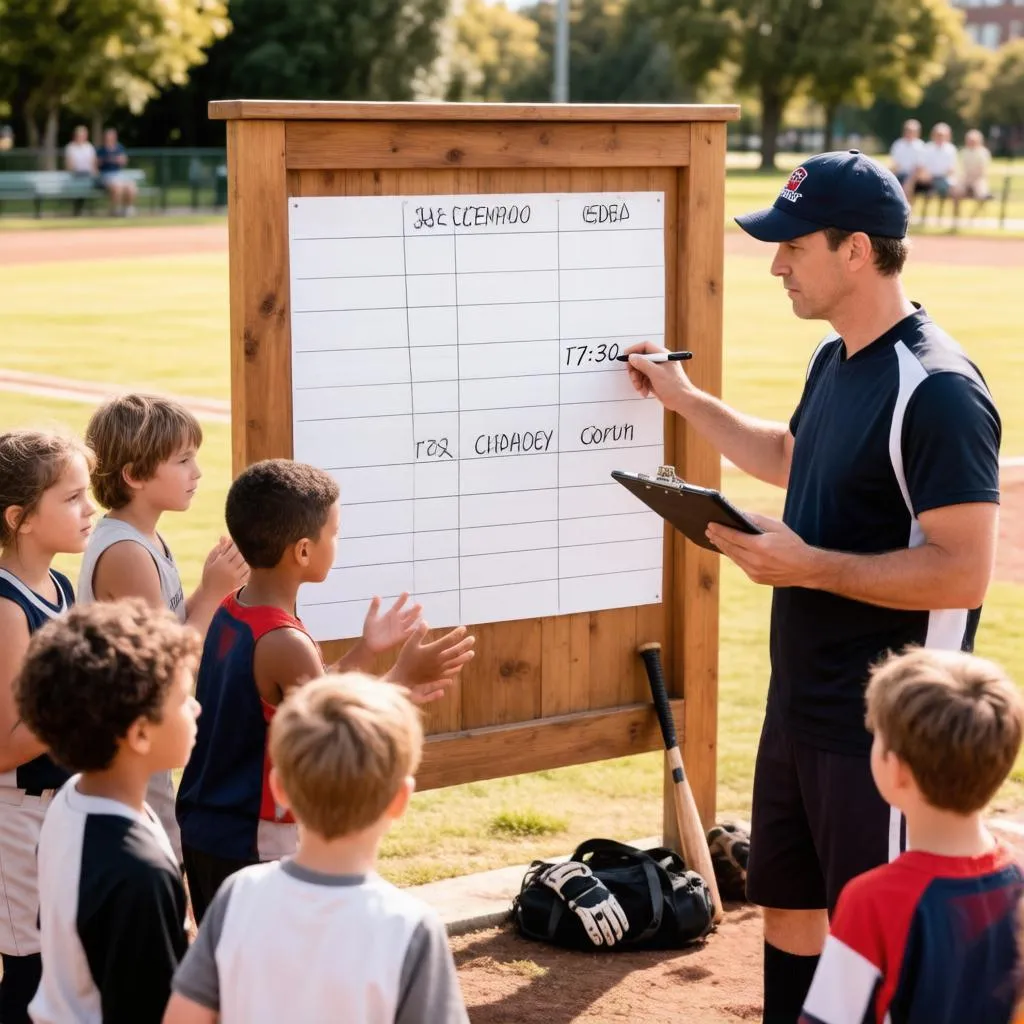
Every parent eventually hears some version of the same advice: practice makes perfect. In baseball, that saying needs a correction — practice makes permanent, and only the right amount of the right kind of practice makes better. A seven-year-old swinging a bat three hours a day is not building a future star; he is building sore elbows and a dislike of the sport. Meanwhile, a twelve-year-old doing twenty focused minutes a day is quietly constructing real skill. The question is never simply “how often,” but how often for which age, in which season, and for what purpose. This guide lays out a realistic framework that parents and coaches can actually follow without exhausting anyone.
Why frequency matters less than quality
The single biggest mistake in youth training is confusing time spent with progress made. Skills in baseball — throwing mechanics, swing path, fielding footwork — are built through focused repetitions with feedback, not through volume alone. An hour of drifting practice where a child throws casually and swings at anything teaches the body sloppy habits that later need unlearning. Short sessions with clear goals do the opposite: they concentrate the brain’s attention, which is where motor learning actually happens. This is why a thirty-minute daily routine outperforms a four-hour weekend marathon, even though the marathon looks more dedicated. Younger players especially lose focus quickly, so their practice time should always be shorter than a parent’s enthusiasm.
Training frequency by age group
Development research and coaching experience point in the same direction: younger bodies need less structured baseball, not more. General athletic play builds coordination that specific drills refine later, and a child who plays multiple sports at eight tends to become a better overall athlete at fourteen. The framework below reflects widely accepted coaching practice, though every child is different:
| Age | Structured baseball per week | Session length | Rest days |
|---|---|---|---|
| 5–7 | 1–2 sessions | 30–45 minutes | Frequent, play-based |
| 8–10 | 2–3 sessions | 45–60 minutes | 1–2 full rest days |
| 11–12 | 3–4 sessions | 60–75 minutes | 1–2 full rest days |
| 13–14 | 4–5 sessions | 75–90 minutes | At least 1 full rest day |
| 15+ | 5–6 sessions | 90–120 minutes | 1 full rest day |
Reading the table, the pattern is clear: structured time grows with age, but rest never disappears. The numbers describe total baseball activity — practices, games, and lessons combined — not additional throwing on top. A ten-year-old with two team practices and one game has already reached the upper end of his range, and adding daily backyard pitching turns a healthy schedule into an overloaded one. Throwing volume deserves special caution, because young arms tell no stories until the damage is done; pitch counts and rest days exist for the bodies, not the standings.
The anatomy of a good practice session
Duration matters less than structure. A well-built session has a shape: warm-up, skill blocks, competitive finish. Parents running backyard sessions and coaches running team practices can both use the same skeleton, adjusted for time. A solid sixty-minute practice typically follows this flow:
- Warm-up and dynamic movement — five to ten minutes of light running, arm circles, and stretching, which prepares joints and prevents the pulls that sideline kids for weeks
- Throwing progression — ten minutes of catch at increasing distance, which doubles as the day’s arm-care work
- Primary skill block — fifteen to twenty minutes on one focus, such as fielding ground balls or hitting off a tee, keeping the number of coaching points to one or two
- Game-speed application — ten to fifteen minutes turning the skill into live situations, because skills rehearsed slowly do not transfer to games automatically
- Competitive finish — five to ten minutes of something fun with a scoreboard, like a bunting contest or relay race, which keeps kids returning willingly
The competitive finish is not decoration. Children stay in sports because practice ends with something enjoyable, and a player who quits at nine gets no benefit from any schedule on any chart.
A sample week during the season
In-season weeks must balance games, practice, school, and recovery, and the most common failure is stacking too much on the days before and after games. Games are themselves intense practices — a three-game weekend replaces a weekday session, it does not add to one. A realistic in-season week for a ten-to-twelve-year-old looks like this:
- Monday: light skill work or a short hitting session, letting the weekend’s arm recover
- Tuesday: team practice with full defensive and baserunning work
- Wednesday: rest or free play, deliberately no organized baseball
- Thursday: team practice or individual hitting time, shorter if the weekend is heavy
- Friday: pre-game routine only, light throwing and swings off a tee
- Saturday and Sunday: games, with no extra throwing outside the game plan
The pattern respects one principle above all: the arm needs a genuine day off each week. Families that treat Wednesday as sacred recovery time rarely deal with sore-shoulder seasons, and the player arrives at the weekend fresh instead of fried.
The off-season: where real development happens
Between seasons, the structure flips. Games disappear, and the calendar opens for the kind of deliberate work that in-season schedules crowd out. Off-season training is also where the biggest trap hides: the temptation to train year-round at full intensity. Professional pitchers take months off throwing every year, and growing athletes need that rest even more. A sensible off-season for a youth player emphasizes different work entirely:
- General athleticism — running, swimming, climbing, and other sports that build the coordination baseball borrows
- Strength foundations — age-appropriate bodyweight work such as squats, planks, and push-ups once children are old enough
- Limited skill maintenance — one or two short hitting or fielding sessions weekly, keeping the feel without the grind
- A true throwing break — several weeks with no pitching at all, typically right after the season ends, before any throwing program resumes
Players who take this approach come back in spring stronger, not rusty, and the ones who throw year-round frequently arrive at tryouts with tired arms and stale swings. Rest is not the absence of training; it is part of the training.
Warning signs of too much
Overtraining rarely announces itself clearly. It arrives as small changes that parents can easily attribute to mood or growth, which is why a short checklist helps. Watch for these signs over a season:
- Persistent soreness in the elbow or shoulder that lasts beyond a day after throwing
- Declining enthusiasm, where a child who loved practice starts dreading it
- Falling performance despite increasing effort, a classic overload signal
- Sleep disruption or constant fatigue on weekends
- Irritability around practice days that goes beyond ordinary childhood moods
Any of these, especially the arm soreness, warrants immediate reduction in throwing volume. A week of rest in July costs nothing; an injured growth plate costs a season or more.
Fitting practice into a busy family
The perfect schedule that never happens is worth less than an imperfect one that does. Real households juggle work, siblings, and homework, so the practical answer is building tiny, repeatable routines rather than grand training blocks. Twenty minutes in the garage with a tee before dinner, catch in the yard after school, or a Sunday afternoon drill session each contributes more over a year than occasional heroic efforts. Consistency compounds; intensity does not. Parents who frame practice as a shared habit — “we throw after homework” — also remove the nightly negotiation, which is where most training plans quietly die.
The long game
A youth baseball career is a decade-long project, and the schedules that produce successful high school players almost never come from maximum early intensity. They come from children who stayed in love with the game, developed general athleticism across multiple sports, and intensified gradually as their own motivation grew. The frequency chart by age, the weekly rhythm, and the off-season pattern all serve one purpose: keeping the player healthy and eager for the next stage. When practice is structured, rest is protected, and fun survives, the question of “how often” answers itself — often enough to improve, rarely enough to want more tomorrow.