
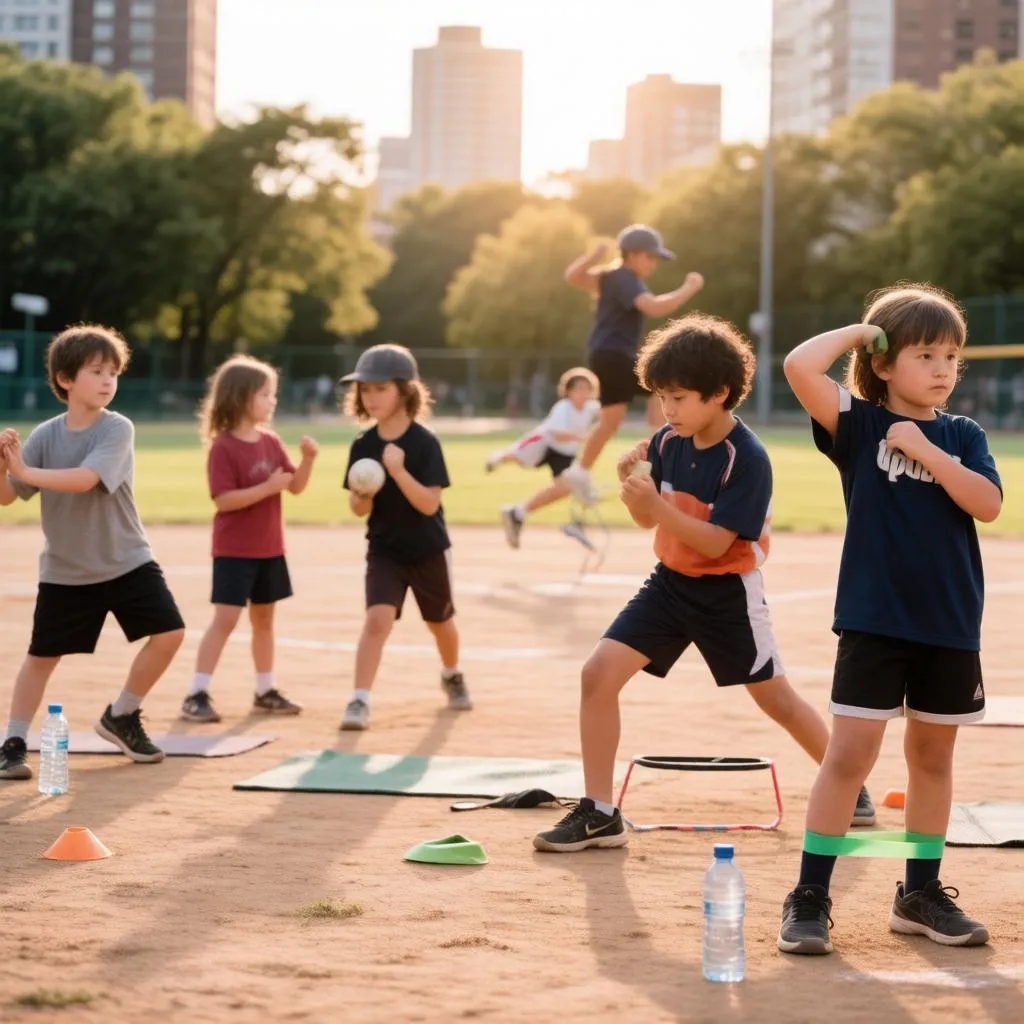
Children sprint out of the car, grab a glove, and want to be throwing inside of ninety seconds. Adults are little better — most teams still warm up by loosely jogging a lap and then immediately lobbing the ball across the diamond. The problem is that young bodies are not cars that start with a key; they are engines that need to be brought up to temperature. A proper warm-up reduces muscle strains, protects growing shoulders and elbows, and — the part nobody talks about — improves the first hour of play, which is when most youth errors and wild throws happen. The good news is that a genuinely effective routine takes about fifteen minutes and requires no equipment beyond a ball and a wall.
What a warm-up is actually doing
The purpose of warming up is not stretching in the way most people imagine it. Static stretching — holding a hamstring pull for thirty seconds — loosens muscles but temporarily reduces their power, which is the opposite of what a body needs before sprinting to first base. What works instead is a gradual escalation: light movement to raise the heart rate and body temperature, dynamic movements to put joints through the ranges baseball demands, then progressive throwing to load the arm before real pitches. When those three stages happen in order, the nervous system wakes up, the shoulder’s small stabilizing muscles engage, and the first throw of the day is as accurate as the twentieth.
Stage one: raising the temperature
Everything starts with three to five minutes of general movement. The goal is simple — a light sweat and a faster heartbeat — and any activity that achieves it counts. For teams, the most practical options are these:
- Jogging a foul-line lap out and back, at a conversational pace where kids could still talk
- Side shuffles down and back, which prepare the hips for fielding stances before anything else does
- Skipping with high knees, an underrated drill that wakes up coordination and landing mechanics
- Carioca, or grapevine steps, teaching hips to rotate while the torso stays level
- Butt kicks and straight-leg marches, lengthening the stride gently without forcing a sprint
By the end of this stage a young player should feel warm but not tired. If anyone is breathing hard, the pace is too high — the point is preparation, not conditioning, and conditioning belongs elsewhere in practice.
Stage two: dynamic movements for baseball
Once the body is warm, joints need to be taken through the specific motions baseball uses. Throwing, swinging, fielding, and sprinting all demand rotation through the hips and shoulders, and a body that has not rehearsed those ranges will guard against them for the first several plays. A dynamic circuit of eight to ten movements, each done for ten to twenty yards or ten repetitions, covers everything a youth player needs:
- Arm circles — small to large, forward and backward, ten in each direction per arm
- Arm swings across the chest — ten reps, hugging and opening, to mobilize the shoulders
- Torso twists with hands on hips — ten each way, priming the rotation a swing requires
- Walking lunges — ten per leg, opening the hip flexors that shorten from sitting at school all day
- Leg swings forward and sideways — ten per leg while holding a fence, loosening the hamstrings and groin
- Walking toe touches — alternating hand to opposite foot, adding a hamstring stretch in motion
- Ankle circles and heel walks — ten each, because fielding and base running live and die by the ankles
- Wrist and forearm rolls — often skipped, yet crucial for the grip that controls every throw and swing
Five or six minutes covers the whole circuit. Younger players can treat it as a game — leaders take turns choosing the movement — which keeps attention on the routine instead of the clouds overhead.
Stage three: progressive throwing
Throwing is the warm-up step most often butchered, and it is the one that matters most for arm health. Kids who walk onto the field and immediately launch a ball across forty feet are asking a cold shoulder for maximum effort, and the elbow absorbs the bill. The arm needs to be loaded gradually, and the standard progression is distance-based: begin at short range, move back in steps, and only reach full distance after several minutes. A sensible sequence looks like this:
- Start at fifteen feet with easy wrist-and-shoulder flips for about ten throws
- Move to thirty feet and throw with normal arm action but controlled effort, roughly fifteen throws
- Extend to sixty feet or the players’ normal game distance, adding intent with each throw over ten to fifteen more
- Finish with five to eight firm throws at game intensity, so the last warm-up throw resembles the first pitch of the game
Pitchers add one more layer: their bullpen session comes after this full sequence, never instead of it. Catchers and infielders can finish with a few ground balls and pop-ups to bring the eyes and feet into the routine. By the end of the progression, every player has thrown with increasing effort rather than starting at maximum, and the difference shows up immediately in command.
A ready-to-use time plan
Fifteen minutes sounds like a lot on a weeknight, but the breakdown shows how little each stage actually needs. The same plan works before a practice and before a game; the only difference is that pre-game routines should end about ten minutes before first pitch so the body does not cool down again.
| Stage | What it includes | Time |
|---|---|---|
| General movement | Jog, shuffles, skipping, carioca | 4 minutes |
| Dynamic circuit | Arm circles, lunges, leg swings, twists | 5 minutes |
| Progressive throwing | Short flips to full-distance throws | 6 minutes |
| Final pickups | Firm throws and first defensive reps | 3 minutes |
Eighteen minutes total, and less if the team moves briskly between stages. Teams that build this into their arrival routine — cleats on, water bottles down, warm-up starts — never have to negotiate it, because the habit does the persuading.
Mistakes that undermine the whole routine
Most warm-up failures are not sins of omission but of execution, and they repeat so often at every field that they deserve their own warning list:
- Long static stretching before play, which feels responsible but dulls power for the next half hour
- Maximum-effort first throws straight out of the car, the leading cause of early-season arm soreness
- Skipping stages when running late, even though a shortened full routine beats a complete half of one
- Standing around during team stretching, where kids chat for five minutes and warm up for none of them
- No cool-down at all, leaving tight muscles to stiffen on the car ride home
Each has a simple fix. Replace pre-game static stretching with the dynamic circuit and save the held stretches for after play. Make the first throws the easiest ones by rule. And end every session with two minutes of easy jogging and gentle stretching, which costs nothing and noticeably improves how kids feel the next morning.
Adjusting for age, weather, and position
No single routine fits every situation, and small adjustments keep it appropriate. Six- and seven-year-olds can compress the whole thing to eight minutes — their bodies warm quickly and their games are short — while teenagers benefit from the full progression plus band work for the shoulder. Cold mornings, especially in early spring, deserve a longer stage one and a slower throwing ramp, because muscles in forty-degree air need real time to reach working temperature. Position matters too: pitchers and catchers should add extra shoulder circles and band pulls, outfielders benefit from extra sprint build-ups, and every player coming off an injury absence should re-enter with a longer, gentler version until cleared by a parent or professional judgment.
Making the routine stick
A warm-up only works if it happens every time, and consistency comes from structure more than enthusiasm. Teams that assign a captain to lead each stage turn the routine into a ritual, and rituals survive bad weather, late arrivals, and distracted twelve-year-olds. Parents can help at home by treating the driveway version the same way — a short throw after school with the same progression, just compressed. The habit built at ten years old is the same one professional players still follow decades later, which is the quiet proof of how much a simple fifteen-minute routine is worth: it protects young arms today and quietly builds the discipline that keeps them throwing for years to come.