
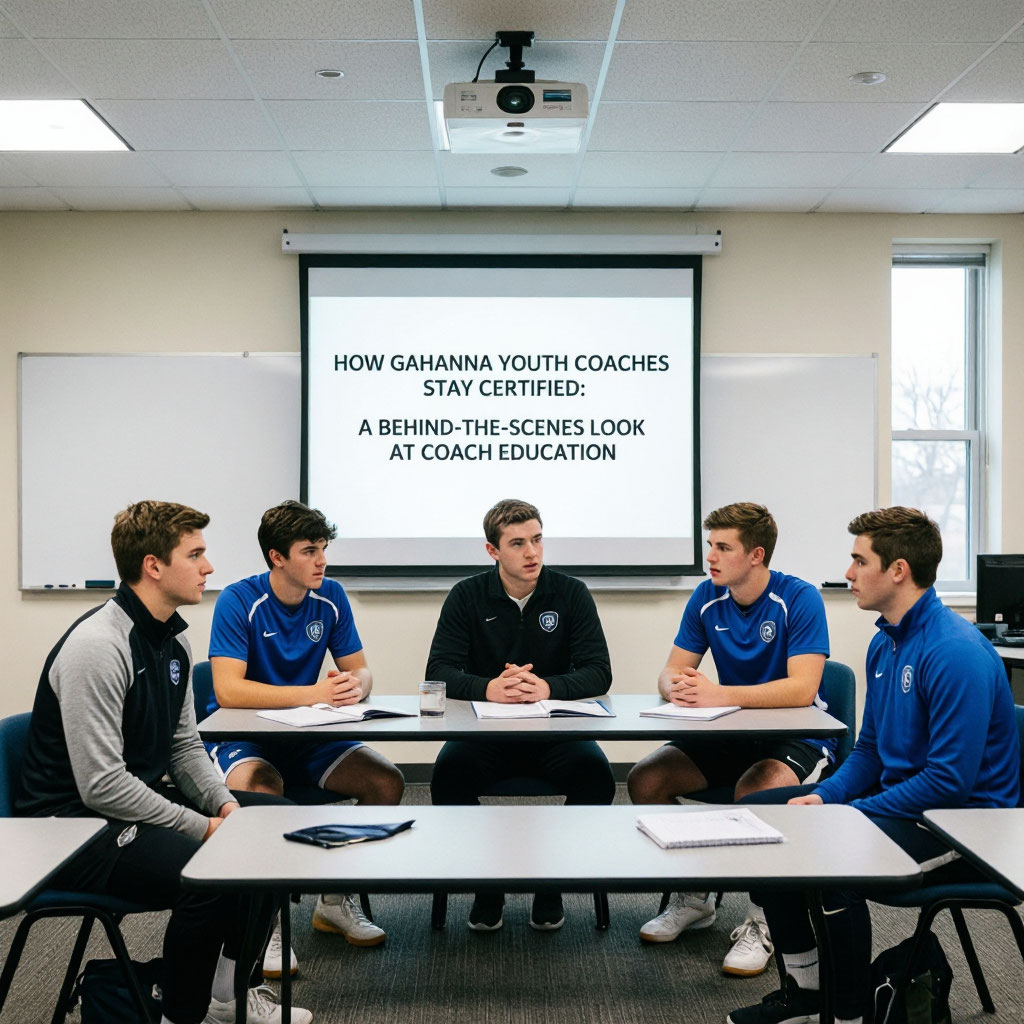
Every weekday evening across the parks and school gymnasiums of Gahanna, a familiar scene unfolds. Parents pull up to the curb, drop off their children with duffel bags and water bottles, and watch them run toward a group of adults wearing matching volunteer shirts. There is a deep, unspoken contract of trust in this daily transition. Parents are handing over their most precious treasures to volunteer mentors, trusting that these adults will not only teach them how to hit a curveball or execute a chest pass but will also keep them safe from harm. What many families do not realize is that behind those volunteer shirts lies a rigorous, multi-layered regulatory framework. Before any individual is permitted to blow a whistle or step into a dugout in Gahanna Junior League Sports or local middle school programs, they must navigate a demanding training pipeline. This invisible network of safety standards and educational programs ensures that local recreational activities remain a secure environment for character development and physical growth.
The essential security screening for all volunteers
The foundation of player safety in youth athletics is not found on the playbook or the practice plan; it begins with an intensive screening process designed to filter out individuals who do not meet the community’s high standards of trust. To protect children from potential physical or emotional harm, the league mandates a thorough evaluation process for every prospective mentor. This first barrier is non-negotiable and must be completed prior to any direct interaction with players on the field or court.
To establish a baseline of security across all athletic divisions, the league operates a strict administrative clearance sequence. Every candidate must complete each stage of this background vetting before receiving their official seasonal credentials.
- Online profile registration: candidates submit a formal application indicating their preferred sport, division, and previous teaching experience.
- Multi-state database query: the system cross-references the volunteer’s identity against national criminal registries and sex offender databases.
- County-level courthouse check: local records in Franklin County are examined to identify any pending legal issues or local infractions.
- Annual credential issuance: approved volunteers receive a physical or digital badge that must be visible during all practices and games.
These steps create a reliable first line of defense, ensuring that only individuals with a proven record of safety and integrity are granted access to the youth of the community. Once this legal clearance is successfully achieved, the volunteer transitions from basic safety verification to active educational preparation.
Prioritizing player safety through medical education
Once a candidate is cleared from a security perspective, their training immediately shifts to physical safety and emergency response. In Columbus, Ohio, and its surrounding suburbs, youth leagues must strictly comply with state-level mandates regarding health education. These requirements are particularly focused on recognizing and managing head injuries, which have become a major point of emphasis in modern youth sports safety training Columbus Ohio. Coaches are taught to understand that head injuries are not minor setbacks to be played through, but serious medical events that require immediate professional evaluation and structured recovery protocols.
Under Ohio law, specifically the state’s recognized concussion return-to-play guidelines, coaches are trained to recognize the subtle symptoms of head injuries, such as dizziness, light sensitivity, and cognitive confusion. They learn that their primary responsibility is to err on the side of caution: when in doubt, sit them out. Along with concussion training, volunteers receive instruction in sudden cardiac arrest awareness, commonly known as Lindsay’s Law in Ohio. This training teaches mentors to recognize the early warning signs of cardiac anomalies in young athletes, including unexplained fainting or extreme chest pain during physical exertion. This medical preparation ensures that every local field and court is supervised by someone capable of identifying potential emergencies before they become tragic.
Understanding the certification structure across sports
The depth of training required for volunteers varies depending on the age group of the athletes and the competitive level of the division. While a parent-coach in the non-competitive younger divisions focuses primarily on basic safety and fun, those leading older travel or school-affiliated programs must meet more advanced criteria.
To help families understand the specific qualifications of their children’s mentors, the league maintains a structured matrix that outlines the mandatory requirements for different coaching tiers. This transparent organization of credentials ensures that the level of supervision matches the physical demands of each sport.
| Coaching role | Background check | Concussion certificate | Lindsay’s Law training | First aid & CPR | Positive coaching training |
|---|---|---|---|---|---|
| Coach Pitch volunteer | Required annually | Required bi-annually | Required annually | Recommended | Recommended |
| Minor & Major division | Required annually | Required bi-annually | Required annually | Recommended | Required annually |
| Travel team head coach | Required annually | Required bi-annually | Required annually | Required | Required annually |
| Middle school staff | Required annually | Required bi-annually | Required annually | Required | Required annually |
This clear distribution of responsibilities ensures that older, more physically intense divisions are guided by individuals with comprehensive medical and instructional training. By maintaining these strict benchmarks, local athletic organizations provide a safe environment for competitive play, which helps build long-term confidence among local families.
Cultivating respect through positive sports psychology
While physical safety is the top priority, the emotional well-being of young athletes is equally important. To ensure that local programs foster a healthy, encouraging environment, the league partners with the Positive Coaching Alliance. This specialized educational program shifts the coaching philosophy away from a win-at-all-costs mindset toward a system focused on character development, effort, and resilience. Volunteers are taught that their primary objective is to fill their players’ emotional tanks, helping them bounce back from mistakes rather than discouraging them with harsh criticism.
The principles taught through this sports psychology program are designed to replace outdated, high-pressure coaching methods with modern, constructive techniques. Mentors learn how to challenge their athletes to perform at their best while maintaining a supportive and encouraging environment.
- the double-goal philosophy: focusing on both winning and the more important goal of teaching life lessons through sports.
- mistake ritual development: establishing a simple physical gesture, like a brush-off motion, to help players quickly let go of errors on the field.
- emotional tank maintenance: maintaining a healthy ratio of five positive praises for every single constructive critique.
- honoring the game: teaching athletes to respect opponents, officials, teammates, and the rules of play under all circumstances.
Implementing these supportive coaching practices helps transform local sports programs into positive spaces where children feel safe to try new skills and learn from their mistakes. This focus on positive encouragement reduces performance anxiety, keeps kids in sports longer, and ensures that the lessons learned on the field translate directly into valuable life skills.
How to become a coach in Gahanna
For parents and local residents inspired to give back to their community, initiating the GJLS coaching requirements is a straightforward and rewarding process. The league is always seeking dedicated individuals who are willing to invest their time and energy into guiding the next generation of local athletes. To get started, interested candidates should visit the official league registration portal during the seasonal sign-up windows, which typically open in early winter for spring sports and mid-summer for fall programs.
After completing the initial online application, the league’s administrative staff will guide you through the process of completing your background check, state-mandated safety certifications, and positive coaching coursework. Many of these resources are provided directly through the league at no cost to the volunteer, demonstrating the community’s commitment to making coach education accessible to all.
Building a community of trusted leaders
Ultimately, the comprehensive coaching education and certification program in Gahanna is about much more than simply checking boxes or satisfying state regulations. It is a reflection of the community’s shared values and its commitment to providing every child with a safe, enriching, and positive youth sports experience. By ensuring that every coach is thoroughly vetted, medically trained, and educated in positive sports psychology, the city of Gahanna has built a program that families can trust implicitly. As parents watch their children run onto the fields at Academy Park or step onto the hardwood at the local middle schools, they can do so with peace of mind, knowing that the volunteers guiding them are not just passionate sports fans, but certified, trained, and highly qualified mentors.