
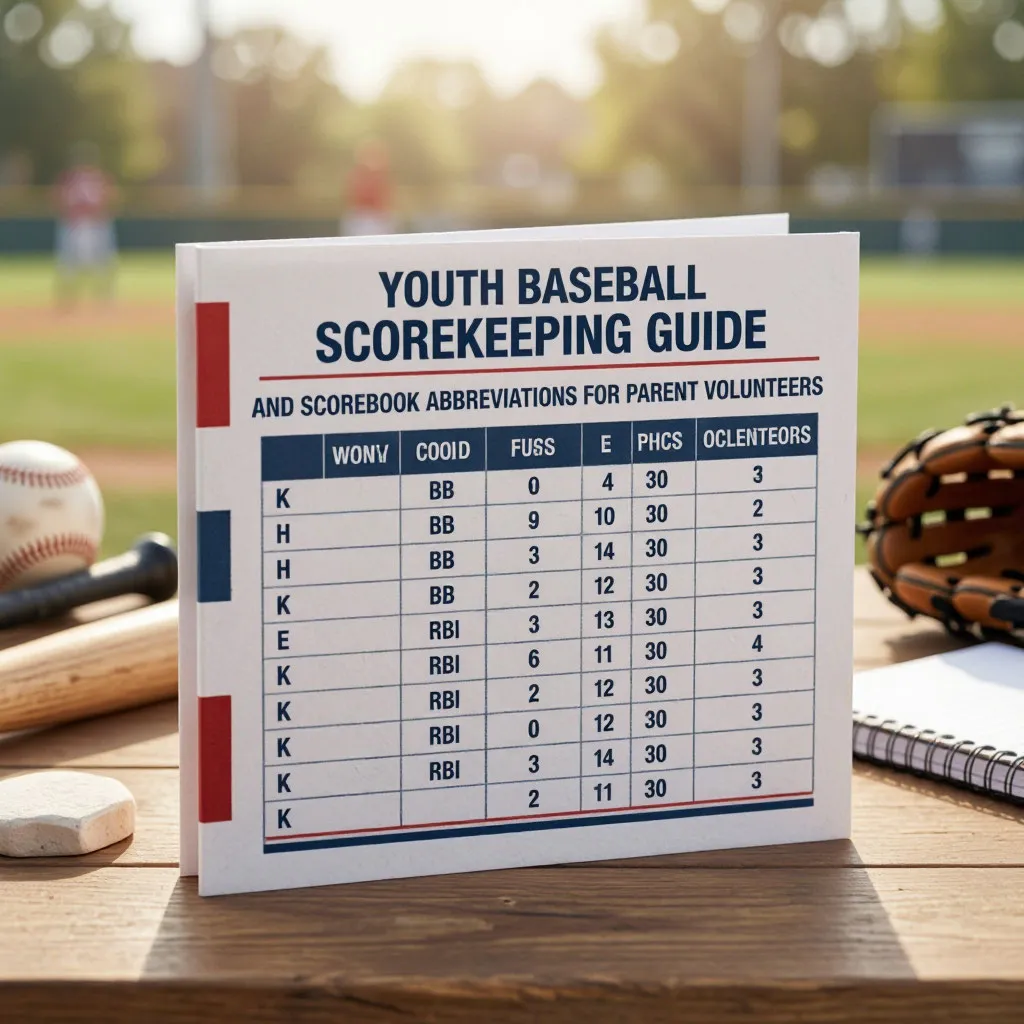
Sitting on the bleachers under the warm summer sun, you hear the coach call out for a volunteer to run the scorebook. A sudden wave of nervousness is common when faced with a grid of empty diamonds and blank lines. However, tracking a game is not just a chore; it is a rich tradition that turns a spectator into an active participant in every pitch, strike, and dramatic slide. Mastering this skill allows you to capture the heartbeat of the game and provide invaluable help to the coaching staff.
The transition from paper grids to modern apps
In local youth leagues, every run and out matters for player development and team standing. Whether you are using a classic leather-bound binder or a modern digital application like GameChanger, the underlying logic of tracking play remains exactly the same. Learning how to keep score youth baseball matches is incredibly rewarding because it breaks down the chaotic action on the dirt into a clean, logical story. You do not need to be a lifelong analyst to get started; you only need to understand the simple visual language used on the pages.
Decoding the grid with common abbreviations
To the untrained eye, a completed scorebook looks like a complex sheet of hieroglyphics. Each box represents a single batter’s turn at the plate, containing a miniature diamond where you trace their physical advancement around the bases. By standardizing the letters and numbers you write down, any coach or league official can look at your sheet months later and reconstruct the entire game play by play.
To make this transition easier, we have put together a quick reference guide that serves as an essential baseball scorebook symbols cheat sheet for any beginner:
| Code | Game event | How to record it |
|---|---|---|
| 1B / 2B / 3B | single, double, or triple | draw a line to the corresponding base |
| HR | home run | trace the entire diamond and color it in |
| K | strikeout swinging | write a standard letter K in the box |
| Ʞ (backward K) | strikeout looking | write a backward K to indicate no swing |
| BB | base on balls (walk) | write BB and draw a line to first base |
| E | fielding error | write E followed by the fielder’s position number |
| F | flyout | write F followed by the number of the catching fielder |
Understanding these essential scorebook abbreviations ensures that you can quickly log each play without missing the next pitch. These abbreviations act as shorthand notes, allowing you to capture complex plays like double plays or errors in a matter of seconds. Once you are comfortable with these symbols, the grid becomes a clean story of the game rather than a confusing puzzle.
Mapping the batter’s journey around the diamond
The core of tracking any baseball game lies in the physical movement of the runners. Each box in the book has a faint diamond printed in the center, which acts as a miniature version of the actual field. Your job is to trace the runner’s progress from base to base as the action unfolds on the field.
To accurately record a player’s journey from the batter’s box to home plate, follow this standard sequence of actions:
- Mark the initial reach: if a player hits a single, draw a dark line from home to first base and note the hit type.
- Track base advancement: when a subsequent batter moves that runner to second, extend the line from first to second base.
- Record runs scored: if the runner successfully reaches home plate, complete the diamond shape and shade the center of the box.
- Note the outs: if the batter is put out, write the specific out code in the middle of the box and circle the out number (1, 2, or 3).
- Close out the inning: when the third out is recorded, draw a heavy diagonal line across the bottom corner of that batter’s box.
This step-by-step process ensures that you never lose track of who is on base or how many outs have been recorded in the current frame. Following these little league scorekeeping instructions helps prevent scoring disputes between teams, as your book becomes the official record of truth. It also gives the head coach a clear view of which players are consistently advancing their teammates.
Essential tips for first-time volunteers
While the mechanical rules of the game are straightforward, tournament days can be loud and fast-paced. Keeping your focus amidst the cheering fans and dugout chatter requires a few simple physical habits. Preparing your workspace beforehand makes a massive difference in your accuracy.
Before the umpire yells “play ball,” keep these practical tips in mind to make your scorekeeping experience stress-free:
- use a pencil: errors happen frequently, and having a good eraser is much better than scribbling over dark ink.
- verify the roster: confirm the batting order and player jersey numbers with both head coaches before the first pitch.
- coordinate with the umpire: listen carefully to the official’s calls to ensure you record a hit versus an error correctly.
- utilize digital backups: if using an app, keep a paper book handy in case your phone battery dies or the screen overheats in the sun.
Applying these basic habits keeps you organized from the first inning to the final out of the game. Your volunteer work behind the backstop provides a massive service to the players, coaches, and families who rely on accurate game records. With a little practice, you will find that keeping score is one of the best seats in the house.