
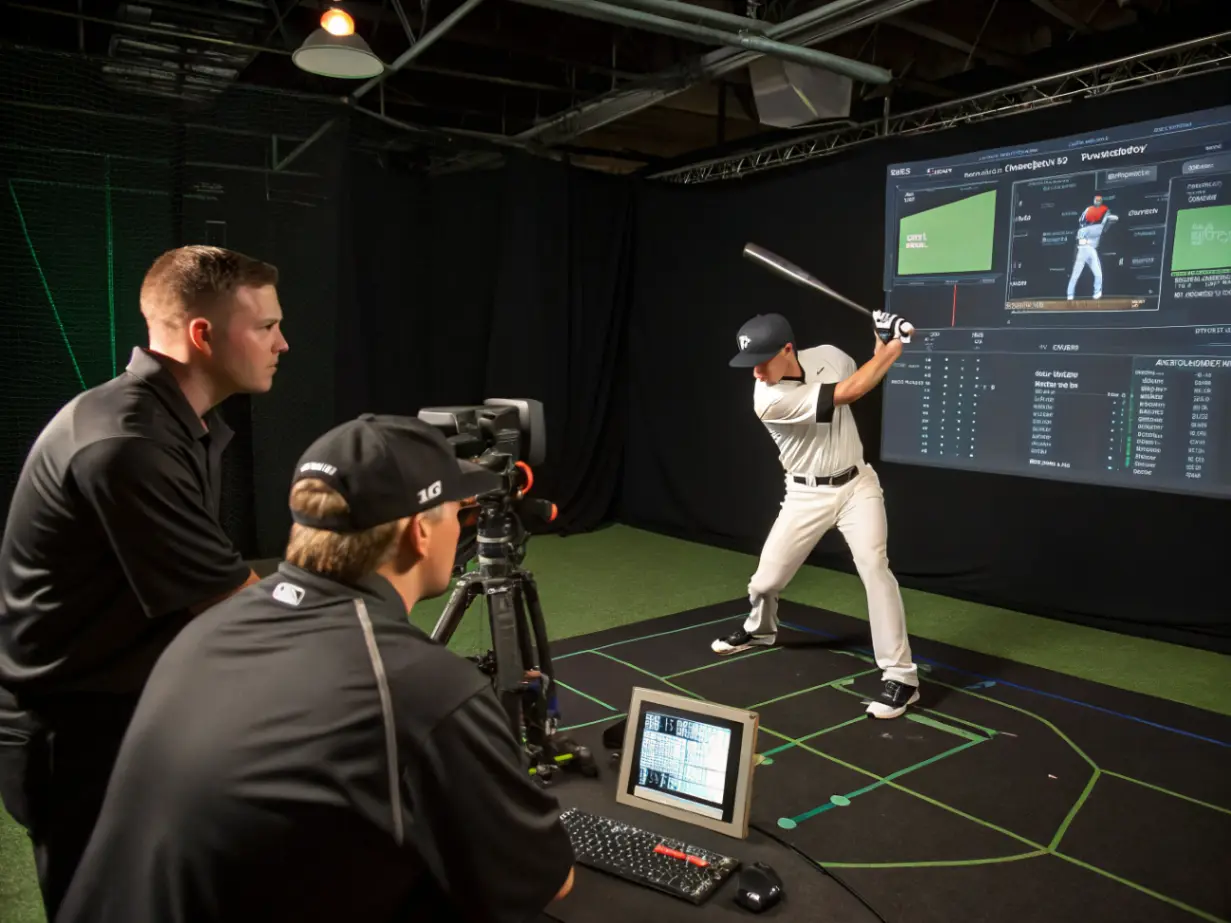
Baseball hitting has evolved significantly over the years. In the modern game, the way players approach their swings has changed, largely due to technological advancements, coaching philosophies, and the focus on data-driven performance. Coaches are no longer relying on traditional techniques alone but are integrating scientific analysis to help players enhance their swing mechanics and overall performance at the plate. This article explores how modern coaches are improving the swing in baseball using a variety of methods and tools.
The Importance of Swing Mechanics
Swing mechanics form the foundation of every hitter’s performance. A good swing involves a blend of strength, speed, and precision. Coaches spend countless hours analyzing a player’s swing to identify areas that need improvement. They focus on elements like the stance, grip, load, stride, and follow-through. Each of these components contributes to the timing, power, and accuracy of the swing.
To understand the significance of each element, it’s essential to recognize how they work together to generate the best possible contact with the ball. A slight change in one aspect of the swing can drastically improve or hinder a player’s performance. Coaches now have access to technologies like high-speed cameras, motion sensors, and biomechanics tools that allow them to break down each part of a swing with incredible detail.
Technology in Modern Hitting
Technology has revolutionized baseball hitting. Coaches today are using advanced tools to analyze a player’s swing like never before. Some of the most common technologies include:
- Video analysis software: Coaches use video to slow down and examine the swing frame by frame. This allows for pinpoint analysis of mechanics, such as the position of the hands, bat path, and hips at various points in the swing.
- Launch angle and exit velocity sensors: These devices measure how the ball leaves the bat, giving coaches valuable insight into whether the player is hitting the ball at the optimal angle and with enough power.
- 3D motion capture: With 3D motion capture, coaches can create detailed models of a player’s swing, tracking movements in three dimensions. This helps identify areas for improvement and can even be used to visualize changes in a player’s swing before they attempt them.
Using these technologies, coaches are able to provide specific, actionable feedback that helps players refine their swings with precision.
Biomechanics and the Science of Hitting
Biomechanics plays an increasingly important role in baseball hitting. By applying principles of physics and human movement, coaches are able to identify how a player’s body moves during the swing and how this movement affects the outcome. For instance, analyzing the torque generated in the lower body and how it transfers to the hands and bat is key to generating power.
Modern coaches rely on biomechanical analysis to study the efficiency of movements. The goal is to minimize wasted motion and ensure that every part of the body works in harmony to produce an efficient swing. By understanding the physics of a swing, coaches can help players optimize their posture, balance, and timing.
Mental Approach: Visualization and Focus
While physical mechanics are crucial, the mental aspect of hitting cannot be overlooked. Many coaches now integrate mental skills training into their programs, teaching players techniques such as visualization and focus. Visualization exercises, in which players mentally rehearse their swings or imagine specific pitch types, can help build confidence and improve timing.
Players are also encouraged to focus on the process, rather than the outcome, to reduce anxiety at the plate. By concentrating on executing a good swing rather than stressing over hitting the ball perfectly, players are able to perform at their best. Coaches now emphasize the psychological components of hitting just as much as the physical ones.
Improving Swing Power and Consistency
One of the main goals for most coaches is to improve both the power and consistency of a player’s swing. Power comes from the ability to generate bat speed and proper contact, while consistency is achieved through good mechanics and a repeatable swing.
To improve power, modern coaches incorporate strength and conditioning programs that target the muscles used in hitting. Exercises that build the lower body, core, and upper body help increase power, which is essential for hitting the ball with force. Meanwhile, drills that focus on hand-eye coordination and timing help players make consistent, solid contact with the ball.
A player’s ability to consistently generate power and contact can be influenced by subtle adjustments in their swing mechanics, such as their bat speed or their swing path. Coaches use advanced data to pinpoint these adjustments and help players fine-tune their swings for optimal performance.
Training with Data-Driven Insights
The use of data analytics has become a major part of how coaches improve a player’s swing. Data-driven insights allow for detailed performance tracking and help identify patterns in a player’s approach at the plate. Coaches use metrics like launch angle, exit velocity, and swing speed to analyze a player’s swing, providing feedback on areas that need improvement.
In addition to swing data, coaches also track in-game performance, such as a player’s ability to make contact with different pitch types. By analyzing this data, coaches can determine which areas to focus on during practice to help a player improve their hitting capabilities.
Key Metrics in Baseball Hitting
| Metric | What It Measures | Why It’s Important |
|---|---|---|
| Launch Angle | The angle at which the ball leaves the bat | Affects the trajectory and likelihood of hitting home runs |
| Exit Velocity | The speed at which the ball leaves the bat | Determines how hard the ball is hit, directly impacting distance and power |
| Bat Speed | The speed of the bat during the swing | Faster bat speed leads to harder, more powerful hits |
| Swing Path | The trajectory the bat follows during the swing | Influences the ability to hit different pitch types and make consistent contact |
This table highlights some of the critical metrics that coaches use to measure a player’s swing performance. These insights are invaluable for making informed decisions about training and adjustments.
The combination of data analytics and traditional coaching methods allows for a more holistic approach to swing improvement. Coaches are able to track progress over time and adjust training methods based on a player’s performance in specific areas.
Conclusion
The approach to improving the baseball swing has evolved significantly in recent years, with modern coaches leveraging technology, biomechanics, and mental training to help players enhance their hitting abilities. From analyzing swing mechanics with high-speed cameras to integrating psychological techniques, coaches are using a comprehensive, data-driven approach to improve players’ performance at the plate. The ability to refine swing mechanics, increase power, and make consistent contact has never been more achievable, thanks to the tools and techniques available to today’s coaches.