
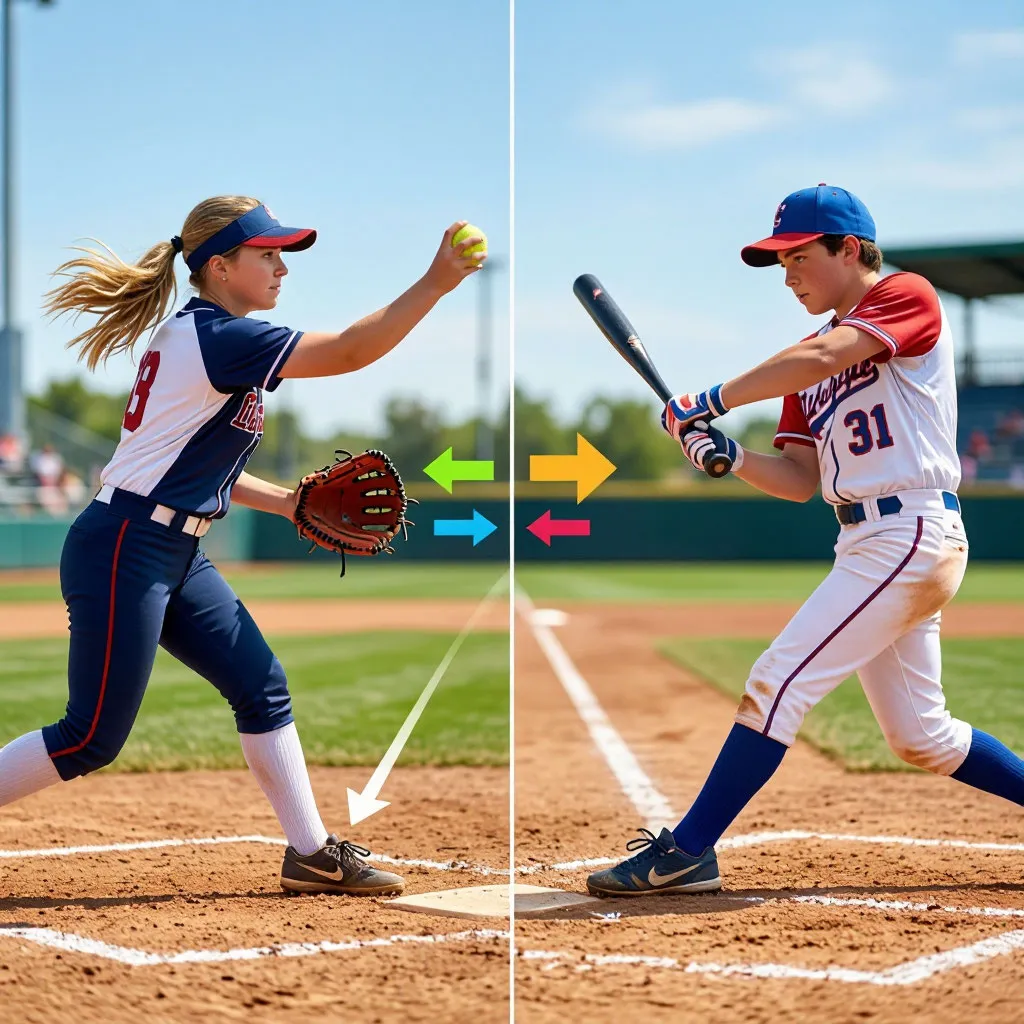
Deciding which diamond sport is the right fit for your child can feel overwhelming with all the terminology thrown around by coaches and leagues. While casual observers often view these games as identical, they are distinct athletic disciplines with their own unique rules, dynamics, and mechanical demands. For families looking into local athletic programs, understanding the core differences between fastpitch softball vs baseball is essential to helping young athletes find their footing, build confidence, and develop the proper physical habits on the field.
The mechanical differences in pitching styles
The most visible distinction between these two sports lies in how the ball is delivered to the plate. In baseball, pitchers throw overhand from an elevated mound, utilizing gravity to generate downward plane and immense velocity. Softball pitchers, on the other hand, deliver the ball using an underhand, windmill motion from a flat pitching circle. This underhand motion is actually more natural for the human shoulder joint, often allowing players to throw more pitches with a lower risk of chronic wear-and-tear injuries.
To help parents and young athletes grasp the physical demands of these unique styles, we can break down the mechanics of each delivery system:
- Underhand windmill rotation: Softball players utilize a complete 360-degree arm circle to generate momentum and release the ball at hip level.
- Overhand release points: Baseball players rely on a high-to-low arm slot, putting significant stress on the elbow and rotator cuff.
- Spin patterns and ball movement: Softball pitches often rise as they approach the plate, while baseball pitches typically sink or break downward.
- Mound vs. flat surface: Baseball players throw from a raised dirt hill, whereas softball players operate entirely on a flat, level surface.
Understanding these mechanical differences explains why training programs for the two sports look so different. While baseball players spend considerable time managing pitch counts and resting their arms, softball players can often throw consecutive days because the underhand motion puts less strain on the critical tendons of the arm.
Contrasting physical dimensions and equipment choices
Beyond the pitching style, the entire playing field and the equipment used are scaled differently to accommodate the unique speeds of each game. Many people assume softball is simply a softer, easier version of baseball, but the reality is quite the opposite. The compact dimensions of a softball field demand faster reaction times from defensive players and baserunners alike.
To highlight these structural differences, the standard youth field specifications and gear requirements show how the games contrast in physical layout.
| Feature | Youth fastpitch softball | Youth baseball |
|---|---|---|
| Ball circumference | 11 to 12 inches | 9 inches |
| Base path distance | 60 feet | 60 to 90 feet |
| Pitching distance | 35 to 43 feet | 46 to 60 feet |
| Bat specifications | Thinner barrel (2.25 inches) | Thicker barrel (2.5 to 2.625 inches) |
| Outfield fence distance | 150 to 220 feet | 200 to 300+ feet |
Analyzing these dimensions reveals why softball is such a fast-paced game. Because the bases are closer together, a ground ball that would be a routine out in baseball often results in a close play at first base in softball. This tight playing field forces players to develop exceptionally quick hands and rapid decision-making skills.
Essential rules unique to the youth softball arena
While both sports share the goal of scoring runs by hitting a ball and running around bases, their rulebooks contain several distinct differences. These guidelines are designed to keep the game moving quickly and to protect players on the shorter base paths. Parents transitioning from one sport to the other must familiarize themselves with these subtle variations to avoid confusion during competitive games.
When introducing young players to youth softball rules, coaches place special emphasis on several key gameplay mechanics:
- No leading off: Baserunners must keep their foot on the bag until the pitcher actually releases the ball from their hand.
- The double first base: Many leagues use a orange safety base at first base to prevent collisions between the runner and the fielder.
- The drop third strike rule: If the catcher drops a third strike, the batter can run to first base if it is unoccupied.
- Look-back rule: Once the pitcher has the ball inside the pitching circle, runners must immediately return to their base or commit to the next one.
- Inning length: Standard youth games typically run for six innings instead of the traditional seven or nine innings found in baseball.
Mastering these rule variations is a crucial step in softball training for beginners. It ensures that players can navigate the base paths aggressively without committing simple mental errors that could cost their team an out during a crucial inning.
Community athletic programs and specialized training
For families living in Ohio, local organizations offer excellent opportunities to introduce young athletes to the sport. Programs like Gahanna girls softball focus on building a strong foundation of teamwork, physical fitness, and sport-specific skills. These community-focused leagues provide structured environments where girls can transition from basic throwing mechanics to complex defensive strategies.
In these localized programs, softball training for beginners focuses heavily on the unique biomechanics of the female athlete. Coaches design drills that emphasize core stability, lateral agility, and explosive leg power, which are vital for both hitting and fielding on the shorter diamond. By participating in these targeted training sessions, young athletes not only learn the physical mechanics of fastpitch softball but also develop lifelong friendships and a deep appreciation for the spirit of sportsmanship.